




webcomics
print
inventions
presentations
consulting

Archive for ‘Visual Communication’


When Metaphors Touch Down

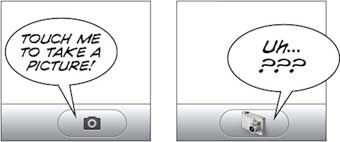
Long-time friend of the site, Greg Stephens suggested I check out this article by Tokyo-based Craig Mod which offers his take on different contents’ ability (or lack thereof) to migrate easily from device to device.

His whole presentation has an amusing vintage-Tufte meets RC-era me feeling, and some of the reasoning may be a bit fuzzy, but his ideas are fun, provocative, and worth a look—as are the many comments that follow.

Craig’s main point—that there are types of content that can’t be endlessly re-flowed and re-purposed because their formal presentation is integral to the work—is a huge issue for comics and the source of a lot of our growing pains to date.

For years, I’ve watched as we’ve tried out a dozen different metaphors for comics on the Web. Pages versus windows, flipping versus panning, “strip” versus “magazine” versus “book”… all the while assuming that the best metaphor(s) would simply win out in the end on an open network.

What worried me is that sooner or later, one or two of those metaphors were bound to migrate to dedicated reading devices, and when they did, the designers of those devices could simply choose which metaphor suited them and lock them in. For a really long time.

If such devices follow an app store model, such experimentation doesn’t have to stop dead in its tracks. Maybe. But there’s no question that “later” is becoming “sooner” is becoming “now” and if we don’t make some smart decisions during this stage of growth, comics could veer dangerously off course for years.


Name that Movie

Here’s a great time-waster spotted by our friend Lori:

Paul Rogers asks if you can name some of his favorite movies based on just 6 drawings in sequence (with no movie stars).

I did pretty well, how about you?


“…the emergence of a mind”

You can accuse him of hyperbole if you like, but I think James Gurney is exactly right. The fact that this sort of thing is happening all around us with increasing frequency is both fascinating and a little spooky.

There’s a sublime scene in the first Terminator movie where a hapless psychiatrist turns off a pager on the way out of a building just as Arnie’s cyborg from the future walks in. Most viewers see the link: how the tiny, primitive devices of today lead to something far more sophisticated (and in that context, sinister) in the future.

There are little fragments of AI in consumer devices that aren’t just incremental steps, they’re markedly different from what came before. They have the flavor of reasoning. Think of mobile apps for pulling songs out of the air, recognizing products from sight, or listening to and understanding our words, translating them.

These are the things in your pocket or just lying around the house right now. On the nightstand. On the kitchen table. They’re convenient and cool, but not much more for most people.

After all, it’s not like they’re walking or anything.

Right?


The Episode with the Dog

*
Oh my God, the episode with the dog…


Is There Anyone Who Hasn’t Seen This?


Kseniya Simonova’s remarkable sand painting video has been viewed by eight million people, so I’m guessing a lot of you have already seen it, but just in case, here it is one more time.

There’s this weird thing that happens where if enough people recommend a link to me, I figure I don’t need to blog about it, because everyone has already seen it. Still, eight million out of six billion isn’t exactly full saturation.

Some of the recommendations came with an “is this comics?” heading, prompting my usual answer: “I don’t think so, but it’s still cool!”

We’re getting close to the end of a decade and a lot of people have been trying to sum up the experience. Short of putting “B.O.B.” on endless repeat, I think a big part of what’s made this decade interesting can be summed up pretty nicely in the phrase “Ukraine’s Got Talent.”


Just Your Average Danish Super-Harbor Comic

Kyle Latino in Tuesday’s comments section alerted us to this comics-style architectural pitch for a the construction of a Danish Super-Harbor. Just click on the opening image to read.


Misunderstanding Markup


Yeah, there are some things I’m kind of obligated to mention here.


Still Cool: The Zoomquilt

ACGalaga mentioned it in yesterday’s comment thread and I’ve linked to it before, but it’s been a while, so here’s a reminder that The Zoomquilt (2007) is still out there and still as cool as ever.

If you haven’t seen it before, definitely take a look. And if, like me, you haven’t looked at it in a while, look at it again. Always something new to see.


Writing with Pictures


One of the comics I picked up in Barcelona last month was Arrugas by Paco Roca, a story about an old man’s encounter with Alzheimer’s Disease. I don’t read Spanish, but visually “reading” it panel to panel at the airport still provided a coherent and sometimes moving experience. Here’s a scan of some early pages to give you a sense of the storytelling. Looking forward to seeing an English edition, it’s clearly a good book.

When I worked at DC Comics in the production department in 1982 (my first job out of college), I spent many lunch hours flipping through the huge collection of untranslated manga at the nearby Kinokuniya, Manhattan’s largest Japanese bookstore. I admired how many could be understood on the strength of their visual storytelling alone. It was refreshing to experience that again.

I met or was introduced to the work of a number of talented artists in Barcelona (many through Astiberri) including Alberto Vazquez, Fermin Solis, David Rubin, Felix Diaz and Tony Sandoval. Most haunting, though, might have been the album I found by French artist Ivan Brun called No Comment, a silent, funny and extremely dark look at modern society.

Writing with pictures (or screaming with pictures, in Brun’s case) in the language of comics.


Yeah, That’s About Right

Patrick Farley makes it visible.